
Preventing mould in a Japanese unit bath
Why unit baths grow mould, how to stop it, and when mould needs more than cleaning.

Why unit baths are prone
Sealed rooms stay humid for hours. Mould feeds on soap scum, skin oils and shampoo residue, so it appears first on silicone seams, door rails and under shelves.
A simple routine
1. Rinse walls and floor with cold water after the last bath. 2. Wipe or squeegee the walls. 3. Leave the door open or the fan running for several hours. 4. Once a week, scrub with a bathroom cleaner and a soft brush.
Treating existing mould
Use a mould remover made for bathrooms, apply to dry surfaces, leave for the time on the label, and rinse well. Never mix chlorine-based and acidic products; the gas released is dangerous. Ventilate while cleaning.
When mould is deeper
Black lines that return in days after cleaning usually mean mould has grown into the silicone seam. Replacing the sealant is the lasting fix.
Where mould starts in a unit bath
Mould in a unit bath rarely starts on the open wall. It starts where water stays: the silicone seam along the tub, the groove under the door, the rubber seal, the corners of the floor and the back of the shelves. These places stay wet for hours after a bath, and soap residue gives mould something to feed on. Knowing this changes what you clean: concentrate on the seams and the places water gathers, not on the middle of the wall.
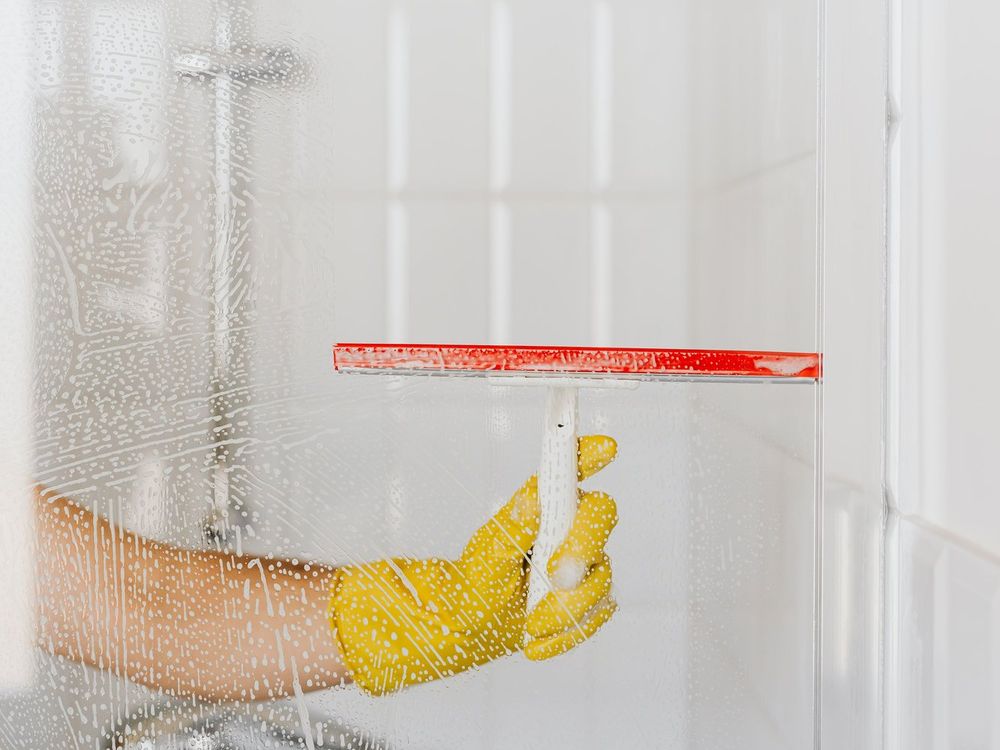
A three-minute routine after each bath
Rinse walls and the floor with cold water, which cools the room and lowers humidity. Wipe the walls and floor with a squeegee or towel, with extra attention to the seams. Leave the door open, or the ventilation fan on, for several hours. Move shampoo bottles and toys off the floor so that the surface beneath dries. Three minutes of this after each bath does more than an hour of scrubbing on the weekend.
Treating mould you already have
For light surface mould, use a mould remover made for bathrooms, following the instructions on the product. Never mix chlorine-based products with acid-based ones, because the gas is dangerous. Ventilate well and wear gloves. Let the product sit for the stated time, rinse thoroughly and dry. If black stains remain in silicone after treatment, the mould has gone deeper, and replacing the silicone is the lasting solution. Take care that you do not scrub so hard that you scratch the resin surface.
Drain, fan and the parts people forget
Hair and soap residue in the drain trap hold moisture and produce odours, so clean the drain cover every week. Wash the ventilation cover monthly, because a dusty cover reduces airflow and slows drying. Check the rubber seal at the bottom of the door, a favourite spot for mould. If you have a laundry rod in the bath for drying clothes, wipe it too. Together, these small habits keep the bathroom much cleaner between professional visits.
Products and surfaces: what to avoid
Unit baths are made of resin or fibreglass with a coating, and the wrong product or tool can dull or scratch it. Avoid scouring powders, hard pads and metal brushes. Use a soft sponge and a bathroom cleaner made for the surface. Do not leave strong products on for longer than the label says. Take care around silicone seams, which can become brittle if repeatedly treated with harsh chemicals. If you are unsure, test in a hidden corner and rinse well.
How often to deep clean the bathroom
With the three-minute routine, a deeper clean of seams, drain and ventilation cover every month, and a full deep clean every three months, most bathrooms stay in good condition. In a humid summer, shorten the interval. If you notice black spots returning quickly after cleaning, the problem may be poor ventilation, silicone that needs replacing or water collecting in one place. A professional bathroom clean can also help you identify the source.
Frequently asked questions
Is cold water better than hot for rinsing?
Yes. Cold water lowers the room temperature and humidity faster, which slows mould growth.
Price shown upfront. Book in 2 minutes, reply within 1 hour
Fixed priceTeam + supervisorEnglish and Japanese
Ready to book? Check availability
Inquiries and reservations are accepted 24 hours a day. When you submit, we check availability, assign a cleaner and contact you within 1 hour.
Prefer to talk? LINE · WhatsApp · hello@estreet.jp